
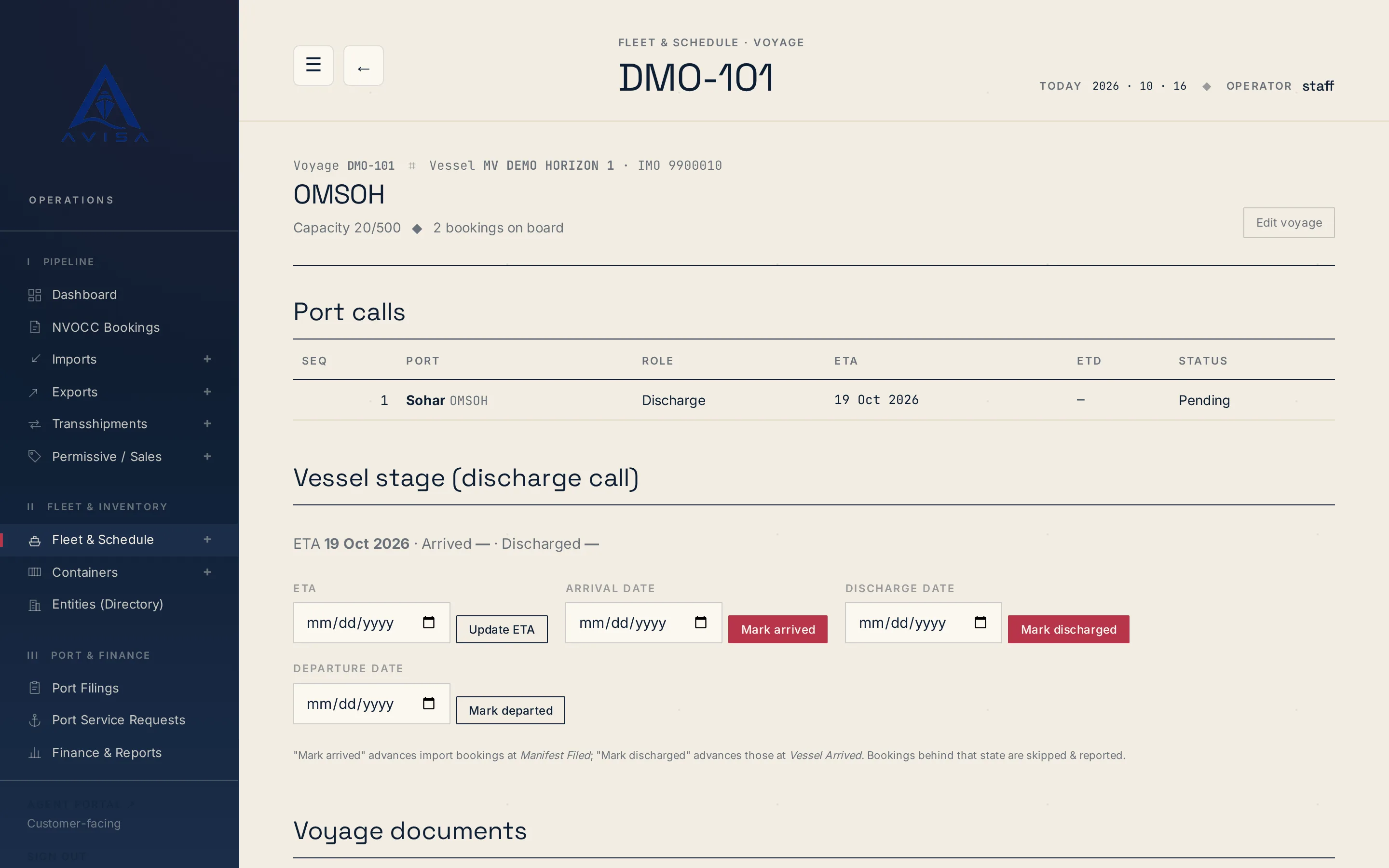
Bayan manifest
AVISA fills the Bayan cargo manifest workbook for each vessel arrival from your bookings, shows the filing deadline and marks land-transit cargo as Transit.
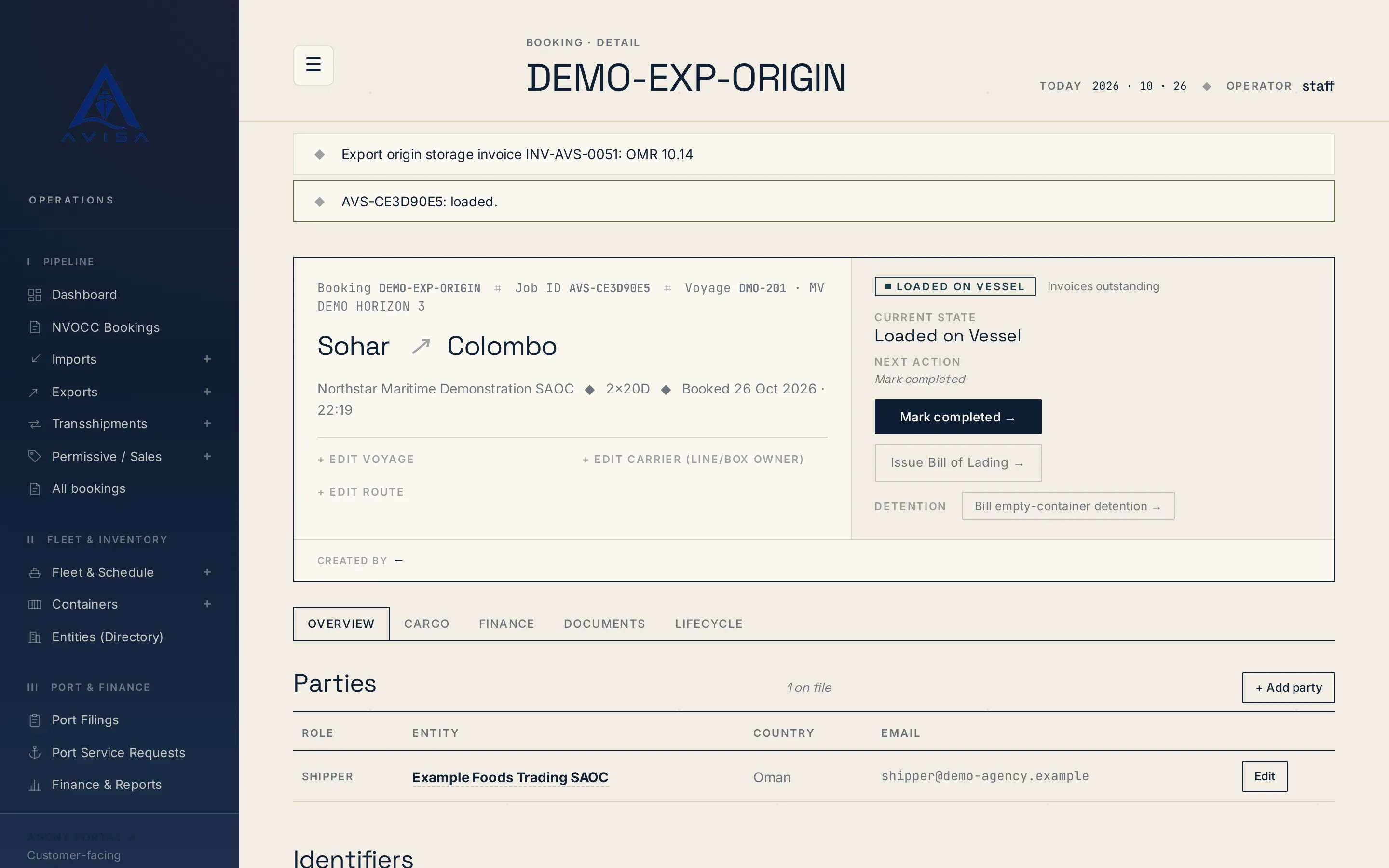
AVISA runs demurrage and detention for each container, from the times your team records for that box, so two boxes collected a week apart are billed a week apart. This part of AVISA does not depend on any country's customs or port systems; those come in country packs. The terms are explained in demurrage vs detention.
Gate-out, empty return, empty pickup and laden gate-in are held for each box. Discharge and loading are held once per booking, and a box with no time of its own uses the booking's. AVISA refuses a time that would end a window before it starts, and logs every moved time with the old and new time and who changed it.
Free days are set per clock and cargo class: general, reefer, dangerous goods or out of gauge. The line's detention free days come from the bill of lading, typed on the new import booking; without them AVISA uses the detention table. Issuing the delivery order freezes the free-time start, free days and expiry on it, so a later tariff change does not move them; on mixed cargo the D/O carries the strictest class. On an export, detention free days are fixed at the first release of empties.
Rates live in rate tables in AVISA's back office, one per clock and cargo class. Each has its free days and a ladder of day-rate tiers with a 20-foot and a 40-foot rate. A line with its own detention terms can have its own detention table, reached from its agency agreement. Detention, export origin storage and transshipment storage are not billed until the rates are marked confirmed, unless a manager overrides with a written reason, which stays on record.
Shipper-owned boxes, and shared LCL boxes on a booking that does not control them, carry no detention. AVISA does not bill the same days twice, and nothing is sent to the customer automatically.
Some lines want detention paid before release. This is off until an administrator sets a start date in the company profile, then applies to import D/Os issued from that date. The D/O form first shows the detention it will bill to the D/O's validity, before VAT. Extending the validity bills only the extra days, and the empty return bills what is still owed for each box. Each instalment is the whole window from discharge less what was already billed for that box, so free days are never granted twice.
If a box billed this way comes back before the date it was billed to, AVISA records the gap on the booking (billed, earned, over-billed and unused days) and lists open cases on the dashboard for users who can see billing. Nothing is credited until someone on your team confirms it.
Storage charges priced by AVISA carry a page headed "How these charges were calculated" in the invoice or proforma PDF. Each container gets a card with its window, free days, chargeable days and each tier band with its days, day rate and subtotal. A later detention instalment shows what was already billed, and a box charged nothing says why. Amounts are before VAT. A line whose amount is changed by hand loses its card.
The storage calculator on the booking page answers "what if the box goes out on Thursday?" It prefills the recorded dates, adds "Detention until" for boxes not yet back, and prices each box on its own times, free days and cargo class; slots with no box yet are priced from the cargo lines. Saved, it becomes a "What-if estimate" proforma PDF listing every container, restated in extra currencies you tick at a rate frozen on the day.
Only a manager can correct a recorded time, on the booking (discharge, loading, yard-in, the detention stop) or for one box. AVISA re-prices the clocks that time moves and revises the invoice into a new version; if nothing is owed any more, the charge stays as a 0.00 line and the invoice is not cancelled. On a booking billed with the D/O, a lower figure for a box already back goes to the over-billing record instead, and a clock kept counting is re-priced only once finalised. If the rates are not confirmed, a booking-time correction is refused, and a box's corrected time is saved while its invoice keeps the old figure; the screen says so.
The "Storage & Demurrage Watch" under Containers lists every discharged box with no gate-out or empty return, and every transshipment box not yet loaded, most billable days first. Each row shows the free-time end, billable days and the amount accrued so far, tagged "free time" or "accruing"; these are not invoices. It downloads as a CSV.
AVISA's screens and documents are in English.
Partly. Import detention is invoiced for the days past free time when the empty return is recorded, and export origin storage and transshipment storage when the booking is marked loaded. Export detention is billed with a button once the booking is loaded. Import demurrage is a proforma for information, because AVISA treats it as the terminal's charge. Nothing is sent to the customer automatically.
Yes. On an import each container has its own gate-out and empty return, and on an export its own empty pickup and laden gate-in. Discharge and loading are recorded once per booking. Free days are set by cargo class, and on an import they are frozen on the delivery order.
A manager corrects it. AVISA re-prices the clocks that time moves and revises the invoice into a new version, and records the old time, the new time and who changed it. If the rates are not confirmed, the invoice is not revised and the screen says so.
Yes. A line can have its own detention table, reached from its agency agreement, and its bookings are priced on it. Other bookings use the general table. Terminal storage is priced on the general tables only.
AVISA prices demurrage, and bills detention and storage, in Omani rials (OMR) today. The what-if estimate can restate its amounts in other currencies at a rate fixed on the day.

Amirh. Safavi
Founder of BudTech
Amirh. Safavi is the founder of BudTech LLC, the IT and software company in Muscat that makes AVISA.
More from Amirh. SafaviAVISA fills the Bayan cargo manifest workbook for each vessel arrival from your bookings, shows the filing deadline and marks land-transit cargo as Transit.
AVISA's core runs the same for any shipping agency. Customs, terminal and tax filings come in a country pack: Oman's is built in, and yours is built for you.
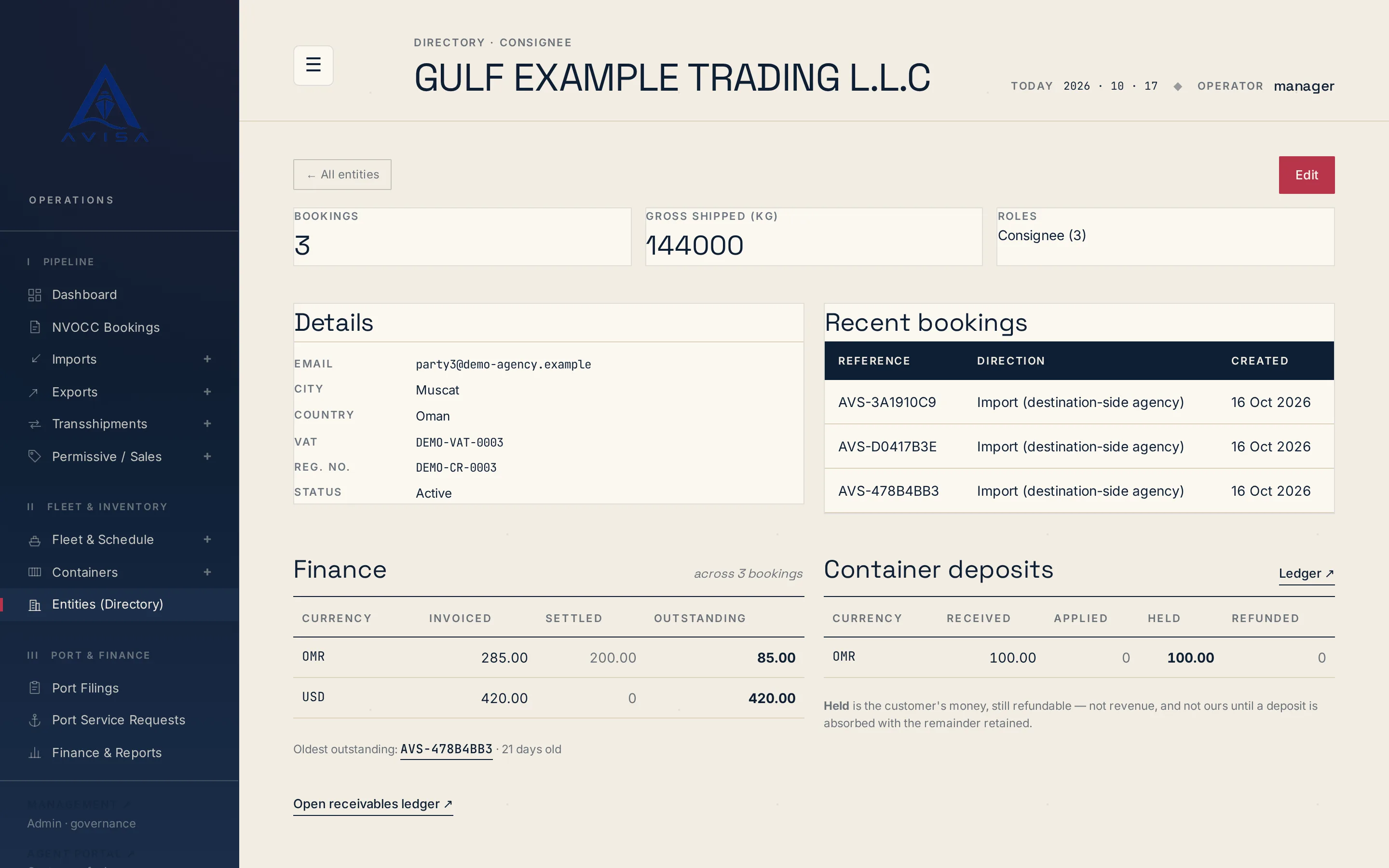
Keep each shipper, consignee and forwarder once, with VAT, registration number and address. Booking forms fill from it and likely duplicates are flagged.
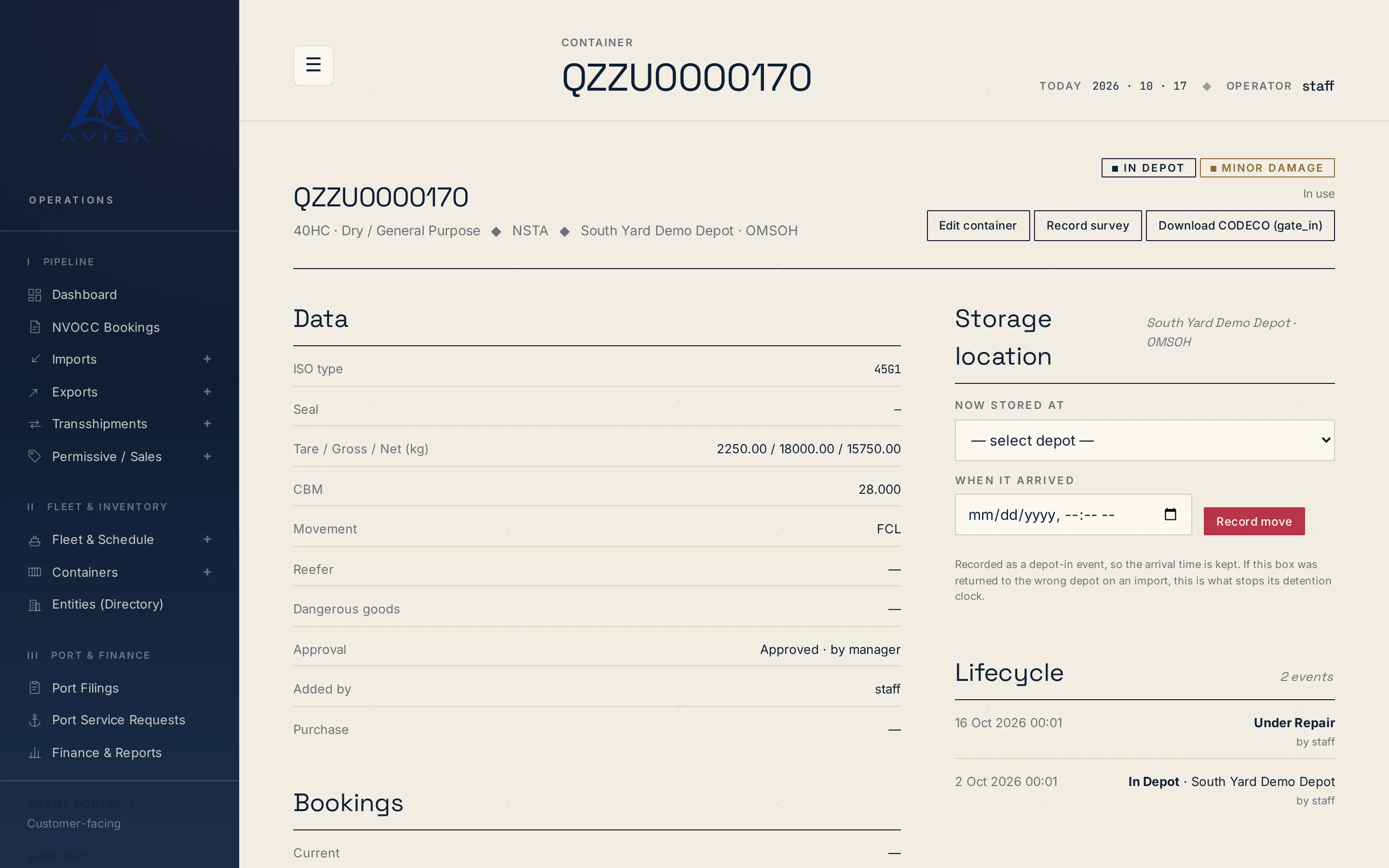
Download container repair estimates as DESTIM files and gate-in, gate-out or post-repair moves as CODECO files, built from your AVISA records. Download only.
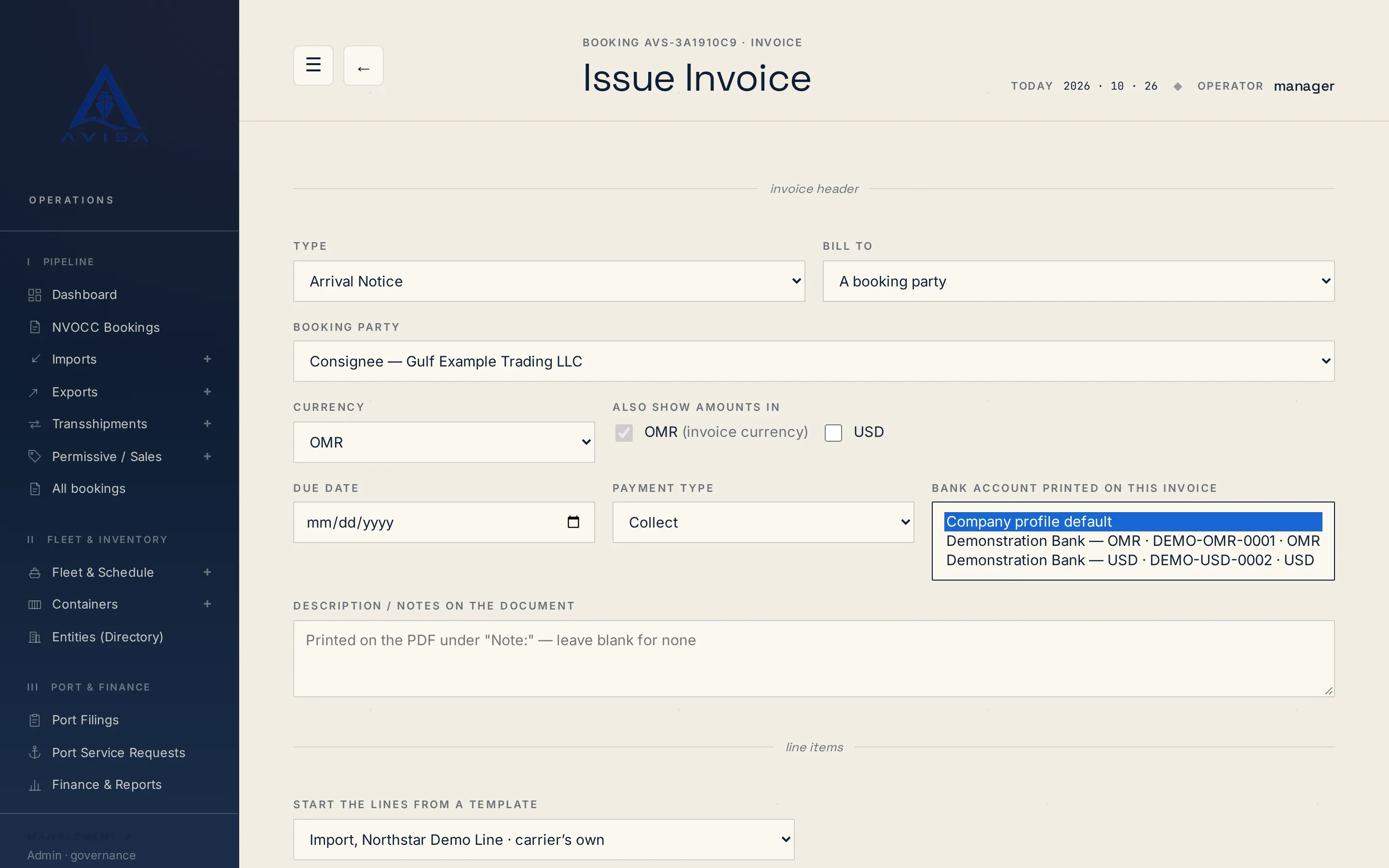
Issue freight invoices, THC and DO charges from the booking, with one charge catalogue, every correction kept, and any currency you hold a rate for.
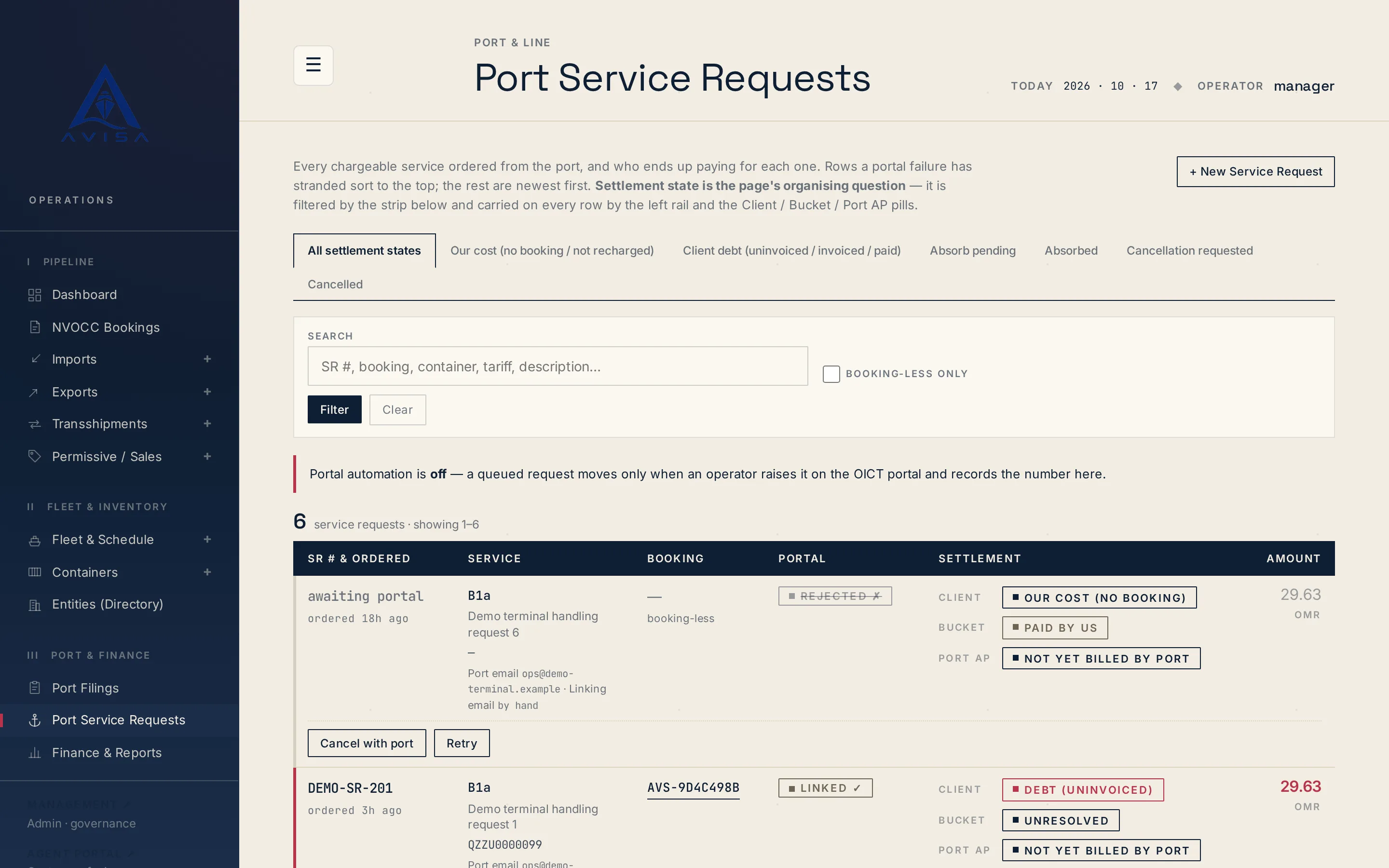
Raise OICT terminal service requests on a booking, price them from the tariff, recharge the client, see who pays. Optional portal automation for checked types.
Send us the details and we’ll get back to you.